Methodology
Silicon Valley at Peerstack Academy
Silicon Valley at Peerstack Academy. The education process is built according to Silicon Valley standards — practice-oriented, project-based, and based on a "Peer-to-Peer" (student-to-student) methodology.
This approach provides students not only with theoretical knowledge, but also with practical skills required in real working environments.
Success Formula
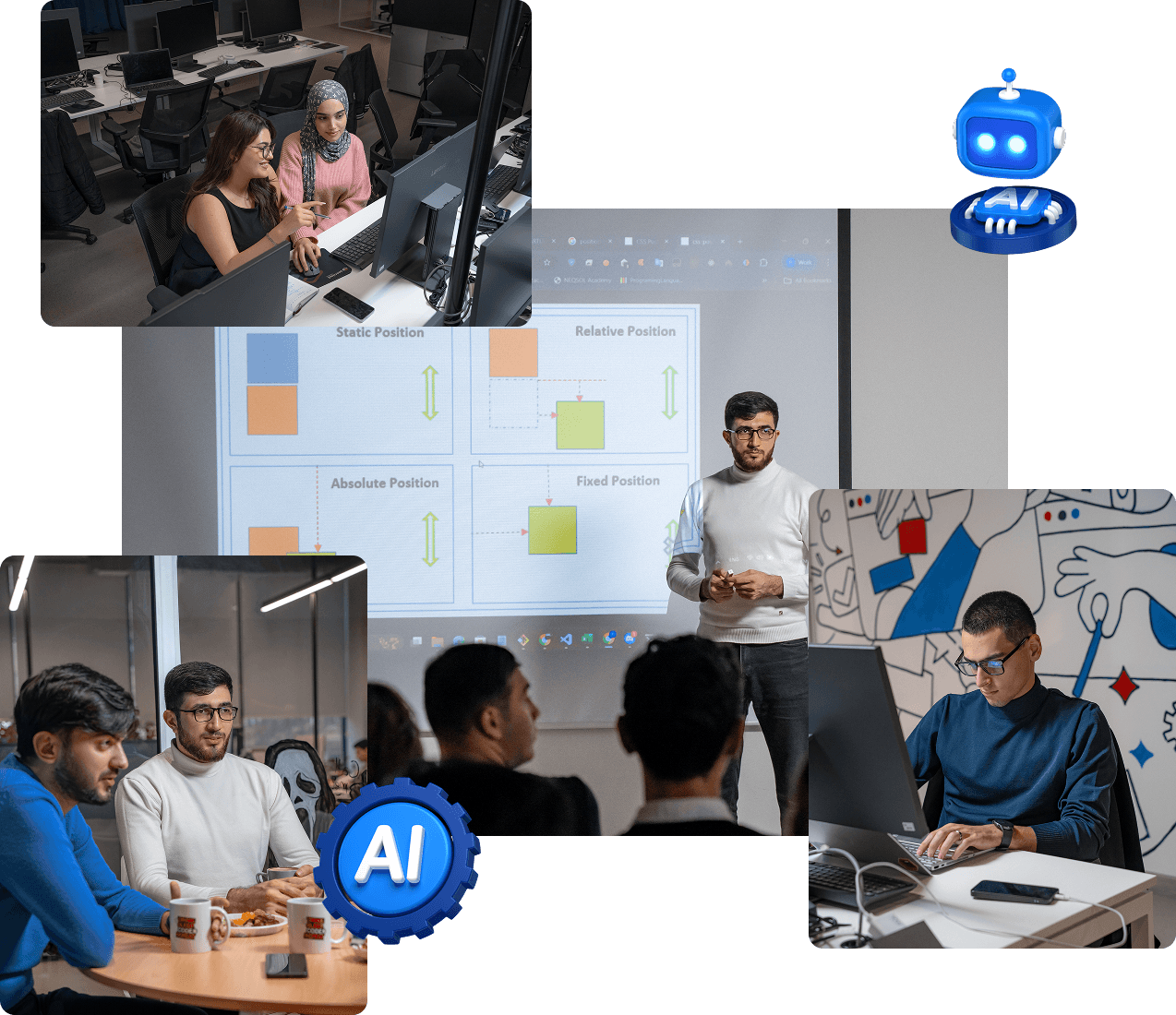
This formula provides our students with both strong theoretical foundations and practical skills required for real business environments.
60% Soft Skills. These skills make a programmer effective within a team: technical skills help with getting hired, while soft skills play a key role in long-term growth. These skills also include communication, behavior, collaboration, and self-management abilities, with a strong emphasis on communication.
Technical skills are the core knowledge of programming and technology. Coding — writing functional and clean code. Vibe coding — hands-on development on real projects. Algorithmic thinking — solving problems through logical steps. Problem solving — effective approaches to technical challenges.
What awaits you? The secrets of professional programming!
Projects
In each module, a series of projects lasting from 1 day up to 3 months are completed. These projects involve building real software products based on specific requirements and constraints. For example, a task management system with tags, permissions, and a core user interface.
Exercises
Lessons and assignments. Each week, participants receive 1–5 coding tasks to complete. These are accessible through our software platform, where your code is automatically evaluated based on speed and functionality. This is a core part of the learning process. Our library includes more than 800 tasks with thousands of test cases.
Role Playing
We use role-playing scenarios for job negotiations, conflict resolution, and technical interviews. Participants take on both interviewer and candidate roles. This two-sided approach sets our program apart.
Gamification
Our system is gamified. Participants earn and spend "Qpoints". They gain points through code reviews and use Qpoints when presenting projects.
Our Features
Structured learning roadmap
Project-based:
Program aligned with local and global market demands:
Peer-to-Peer learning:
Unique centralized QWASAR online platform
Course Sessions
Daily Standups
Daily standup meetings are held to kick off the day. Learners share progress since the last session, discuss challenges, and brainstorm possible solutions together. This approach strengthens mutual support and goal clarity. Facilitated by program managers, these meetings ensure everyone shares updates while closely mirroring real industry practices.
Live Coding Sessions
As part of the group session, one learner tackles a coding challenge, shares their thought process with the group, and invites discussion around alternative solutions.
Weekly Technical Presentation
Weekly sessions cover industry-relevant technical topics that are typically not addressed within projects, preparing learners for technical interviews. Activities range from individual presentations to group work on "new technology canvas" worksheets followed by short presentations.
Collaborative Coding Workshops
Learners collaborate in small groups on unique, time-bound coding challenges. After results are shared, a short "Skills Check" quiz is conducted to reinforce terminology and prepare for potential technical interview questions.
Engineering Case Studies
A case study aligned with the program curriculum, learning objectives, and learners’ skill levels is selected in advance, ensuring topic diversity. Participants then read, analyze, and discuss business challenges, data privacy issues, and related topics, fostering collaboration and diverse perspectives.
Virtual Library (Required Study Time)
Our virtual library provides private breakout rooms for one-on-one conversations or focused group discussions. Whether working independently or in groups, respectful communication and active listening are prioritized.
Paired Programming Groups
The KA collaborative workspace enables two learners to work together on the same project. Partners easily share ideas, solve problems collaboratively, and learn from each other’s coding skills.
Founded in 2019, Qwasar Silicon Valley is one of the partners of “Peerstack Academy”, regarded as a 21st-century software engineering school. Based in Silicon Valley, the company delivers industry-driven software engineering education and is recognized as one of the 12 most distinguished startups in the highly competitive STEAM category.